The Army's Janus Program
The growing need for energy resilience
By: Jeremy P. Feakins
6/10/2026
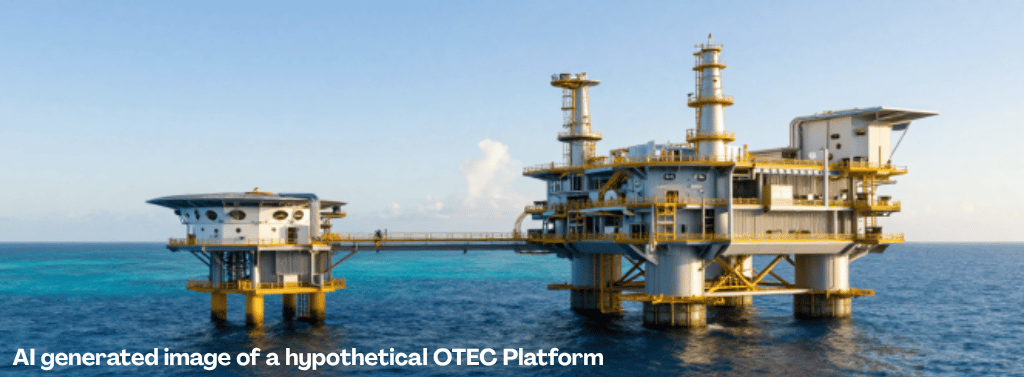

As someone who spent part of my life serving in the British Royal Navy and the last 16 years investing in and advancing Ocean Thermal Energy Conversion (OTEC), I pay close attention when the military begins to focus on a particular challenge.
The U.S. Army's Janus Program is one such example.
Many people have focused on the technology behind Janus, which involves deploying advanced nuclear microreactors at military installations. While the technology itself is certainly interesting, I believe the more important story is what Janus reveals about how military and civilian leaders are thinking about infrastructure in the future.
Simply put, reliable power is no longer viewed as a convenience. It is now viewed as a strategic asset.
The Army has recognized that installations cannot afford to rely entirely on aging electrical grids, vulnerable fuel supply chains, or systems that may be unavailable during a crisis. Whether the threat comes from extreme weather, cyberattacks, geopolitical instability, or rising demand on existing infrastructure, the result is the same: critical facilities must be able to continue operating regardless of external circumstances.
That realization is not unique to the Army. It is occurring across governments, utilities, infrastructure investors, and private industry worldwide.
For years, discussions about energy have often focused on cost alone. Today, the discussion increasingly centers on resilience, security, reliability, and long-term sustainability.
In many ways, that shift is exactly why I became involved with OTEC.
When I first learned about the technology, I was struck by its ability to provide continuous, renewable electricity twenty-four hours a day, seven days a week. But the more I studied it, the more I realized electricity was only part of the story.
OTEC can also produce desalinated freshwater, provide seawater-based cooling, and reduce dependence on imported fuels. Most importantly, it can help build long-term infrastructure resilience for island communities, military installations, and coastal regions.
Those capabilities become increasingly important when you consider the challenges facing many parts of the Indo-Pacific region.
Throughout the Pacific, islands and coastal communities face high electricity costs, limited freshwater resources, growing populations, and dependence on imported fuel. At the same time, many of these locations have significant strategic importance to the United States and its allies.
The question is: how do we provide reliable infrastructure that can support economic growth, national security, and quality of life for decades to come?
I do not believe there is a single answer. Nuclear power will play a role.
Solar power will play a role. Battery storage will play a role.
I firmly believe OTEC will have a role to play.
The future of infrastructure will not be built around a single technology. It will be built around selecting the right technology for the right location and mission.
What I find encouraging about the Janus Program is that it validates our team's long-held belief: resilient infrastructure matters.
The Army is effectively recognizing that energy security is mission security.
The same principle applies to communities, utilities, industries, and nations around the world.
At Ocean Thermal Energy Corporation, we have spent years assembling a team of engineers, military energy experts, infrastructure professionals, and ocean technology specialists to advance OTEC from concept to commercial reality. Today, we are supporting the U.S. Army's evaluation of large-scale OTEC infrastructure applications in the Indo-Pacific region and engaging with governments and organizations worldwide that recognize the importance of long-term energy and water security.
The Janus Program does not alter our vision. If anything, it reinforces that.
Whether the solution involves nuclear microreactors, OTEC, or other advanced technologies, the core requirement remains the same: reliable, resilient infrastructure that can meet the needs of future generations.
I believe the world is entering a period when infrastructure resilience will be one of the defining challenges of our time.
The organizations that successfully address that challenge will help shape the future of energy, water, economic development, and national security.
From my perspective, that future cannot arrive soon enough.
128 E. Grant Street
Suite 103
Lancaster, PA 17602
United States of America
info@jpfvg.com
+1 717 715 0238


Disclaimer: This site is informational and does not constitute an offer to sell securities.
Copyright © 2026 JPF Venture Group, Inc.
Strengthening Communities Through Resilient Infrastructure.